The Ultimate Guide To Growing Your Tiny Apartment Jungle
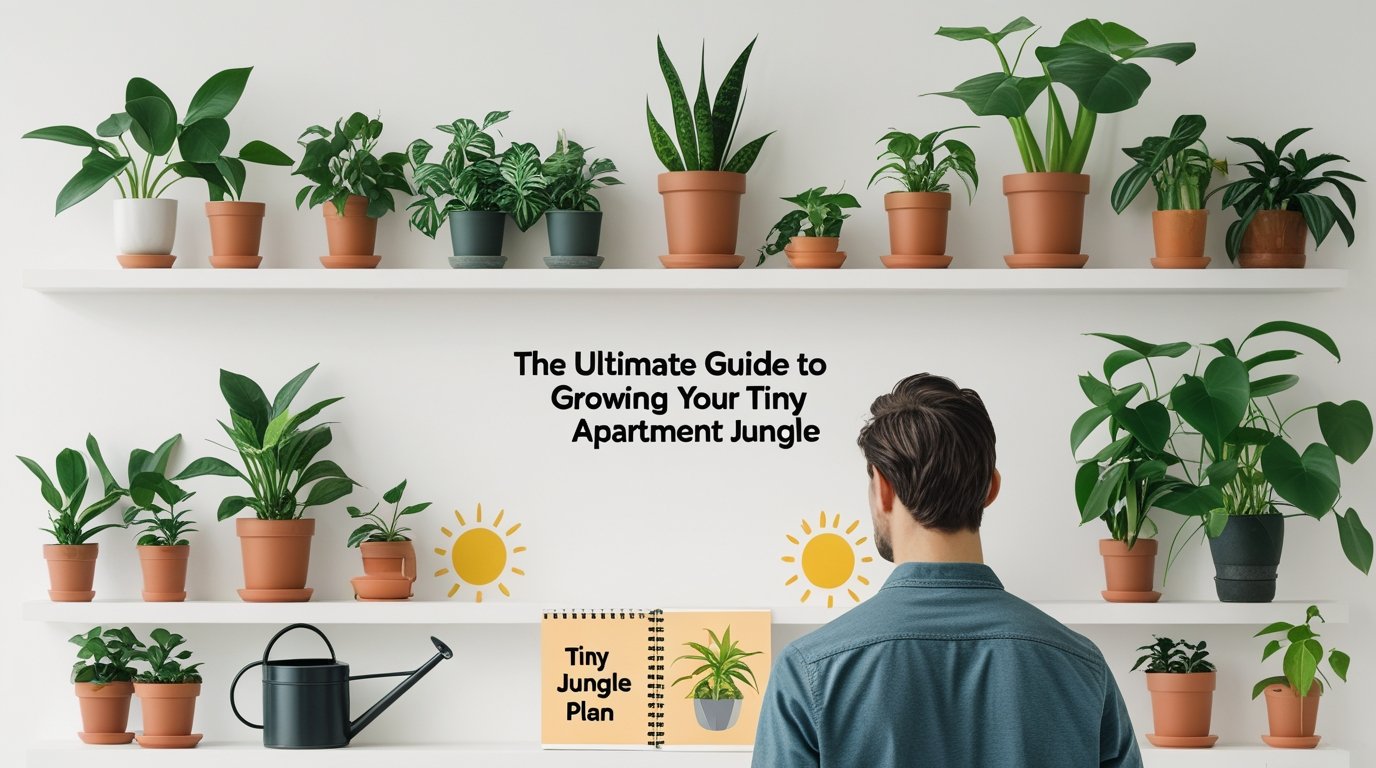
I moved into my first city apartment with a big dream: a lush, thriving apartment jungle. The reality, however, was stark. My space was tiny, the windows faced a brick wall, and the air was drier than the Sahara. Every beautiful plant I brought home slowly turned brown, wilted, and died. It was a plant murder by accident!
I realized that growing house plants in a small space isn’t about buying beautiful greenery; it’s about becoming a detective, an engineer, and a scientist, all within 400 square feet. This blog is my story of failure and eventual triumph. These are the seven concrete indoor plant care hacks I used to conquer my tiny, dark apartment and finally build the thriving, leafy sanctuary I always wanted.
1. The Light Detective Hack:
The biggest mistake I made when starting my apartment jungle was assuming all windows were equal. Spoiler alert: they aren’t! Light is the single most important factor, and you can’t fake it (unless you use expensive grow lights). Before you buy any plant, you have to become a “Light Detective.”
My Personal Light Map:
I spent a whole week simply tracking the sunlight in my tiny space gardening area. Here’s what I learned about the four basic window directions and what they mean for your indoor plant care:
- North-Facing Window: This is the darkest. It gets very little direct sun, only soft, ambient light. I learned to stick strictly to low-light plants here. It’s the perfect spot for plants that live on the floor of a dense jungle (e.g., ZZ Plants, Snake Plants).
- East-Facing Window: The best for beginners! This window gets gentle, direct morning sun for a few hours, then bright indirect light for the rest of the day. This is where I put my most prized plants, like my Pothos and Ficus, because they get that energy boost without the risk of their leaves scorching.
- West-Facing Window: This is tricky. It gets harsh, direct sun in the hot afternoon. It’s too much for delicate plants like ferns. I learned to keep plants a few feet back from a west window or use sheer curtains to diffuse the light, preventing leaf burn.
- South-Facing Window: This is for sun-worshippers! It gets the most intense light, all day long. This is great for succulents, cacti, or anything that flowers. If you have this light, fantastic! But be warned: the intensity can burn some tropical plants.
The Shadow Test:
A simple trick I use to check the light level in any spot is the “Shadow Test.” Stand where you want to put the plant around noon on a sunny day and look at the shadow your hand casts:
- Crisp, defined shadow: Bright light (Good for cacti).
- Soft, blurry shadow: Medium, indirect light (Good for most tropical grow house plants).
- No noticeable shadow: Low light (Only for the hardiest low light plants).
By truly understanding the light, I stopped forcing plants where they couldn’t survive and started building my apartment jungle with intention.
2. The Tiny Space Gardening Secret:
When you live in a small box, you quickly run out of surface area. I realized I could only fit maybe five plants on the floor before my apartment felt cluttered and claustrophobic. The secret to a real apartment jungle in a small space? Forget the floor, you have to look up!
Vertical Gardening Hacks:
I started treating my walls like usable growing space, completely changing my approach to tiny space gardening.
- The Bookshelf Conversion: My best discovery was turning a standard IKEA Kallax or bookshelf into a multi-tiered plant stand. It uses vertical space efficiently, and the plants can cascade down.
- Macramé Hangers (The Ceiling Fix): This is the ultimate space-saver. By drilling a few secure hooks into the ceiling, I hung plants at varying heights using macramé. Trailing plants like Pothos and Philodendron look amazing hanging down, creating that true apartment jungle feel without taking up an inch of floor space.
- Wall-Mounted Shelves and Grids: I installed small, floating shelves specifically for plants. Even better, I found metal grids (like wire memo boards) that I hung on the wall. I clip small pots directly onto the grid. This is a fantastic indoor plant care solution for high-density planting.
Going vertical allowed me to quintuple the number of grow house plants I owned while simultaneously making the room feel taller and more open. It stopped feeling like clutter and started feeling like design. This is the definitive hack for tiny space gardening success.
3. How I Finally Killed My Overwatering Habit:
Before I became a plant detective, I was a plant murderer by kindness. I thought if a little water was good, more must be better. Nope. Overwatering is the number one cause of death for most grow house plants, especially in a dark, cold apartment where the soil takes forever to dry out.
I had to develop “Watering Discipline”, a set of rules that completely changed my indoor plant care routine.
The Finger Test (Forget the Schedule):
The first step was throwing out the schedule. Watering every Saturday might work for some, but not for all. My plants in the dark corner needed water every 10 days, while the ones near the sunny East window needed it every 4 days.
The only rule is the Finger Test: Stick your finger two inches deep into the soil (or up to your second knuckle).
- If the soil is wet or damp: Stop! Do not water. Come back in two days.
- If the soil is dry and crumbly: It’s time to water!
This simple test, more than any calendar, saved my apartment jungle. It taught me to pay attention to the plant’s needs, not my calendar’s demands.
The Drainage Rule:
This rule is non-negotiable for tiny space gardening: every single pot must have a drainage hole. If the water can’t escape, the roots sit in standing water, which leads to root rot—a silent killer.
If you have a decorative pot with no holes (which I did!), use the “double potting” method:
- Keep the plant in a cheap plastic nursery pot with drainage holes.
- Place that plastic pot inside your pretty decorative pot (the cachepot).
- When you water, take the plastic pot out, let it drain completely in the sink, and then put it back in the decorative pot.
This ensures you have the style you want without sacrificing proper indoor plant care.
4. Simple Tricks to Boost Humidity in Dry Air
Most of the beautiful grow house plants we crave, Monsteras, Calatheas, and Ferns, are tropical rainforest natives. They thrive in 70-80% humidity. My apartment, especially when the heat was on in winter, had maybe 30% humidity. The plants were literally drying out, which caused brown, crispy tips, no matter how perfectly I managed my watering.
To keep my tropical pieces happy in my city apartment jungle, I had to learn how to boost humidity quickly and cheaply.
The Grouping Hack:
This is the easiest trick for tiny space gardening: group your plants together! Plants naturally release moisture through their leaves in a process called transpiration. When you group them closely, they create a small, micro-climate around themselves, a “Humidity Bubble.”
I rearranged my shelves so that the humidity-loving plants (like my Calathea) were nestled right beside my low-maintenance Pothos. They shared their moisture, and the collective humidity in that cluster went up noticeably.
The Pebble Tray Solution:
For guaranteed local humidity, I started using the Pebble Tray.
- Get a shallow tray (like a baking sheet or a pot saucer).
- Fill it with small stones or pebbles.
- Add water to the tray until the water level is just below the top of the pebbles.
- Place the plant pot on top of the pebbles.
The water slowly evaporates around the plant, increasing the moisture, but since the pot is sitting on the pebbles, the drainage holes aren’t touching the water, preventing root rot. This simple, cheap trick is essential indoor plant care for anyone serious about growing tropical house plants.
5: The Low Light Plant Roster:
I learned the hard way that you cannot force a plant to thrive in a situation it wasn’t built for. Since the majority of my tiny space gardening area gets only soft, indirect light, my ultimate indoor plant care hack was sticking to a roster of plants specifically known as survivors. These are the workhorses that make a city apartment jungle possible, even in the darkest corners.
My Top 4 Low Light Plants for the City:
These plants are often overlooked for the trendier Monsterras, but they are the true secret to successfully growing house plants in a small, dark home:
- The ZZ Plant (Zamioculcas zamiifolia): The absolute champion of dark spaces. I could forget to water my ZZ plant for three weeks, and it wouldn’t care. It stores water in its rhizomes (underground tubers). If you have a dark hallway or a north-facing window, this plant will thrive. It’s also one of the easiest grow house plants to care for.
- The Snake Plant (Sansevieria trifasciata): With its striking, upright leaves, this plant is perfect for vertical gardening (it takes up zero horizontal space). It tolerates incredibly low light plant conditions and is famously drought-tolerant. It’s the structural backbone of my apartment jungle.
- The Pothos (Epipremnum aureum): This is the ultimate vining plant. While it grows faster in bright light, it will survive and trail beautifully in low light. I use Pothos heavily in my vertical gardening setups, letting the vines cascade down shelving to create that lush, jungle look. It’s incredibly forgiving of missed waterings and is easily propagated.
- The Peace Lily (Spathiphyllum): If you want a plant that flowers in low light, this is your friend. They prefer medium light, but they will survive in lower light, and they actually tell you when they need water by dramatically drooping their leaves. No guesswork needed, perfect for beginner indoor plant care.
By focusing my energy and investment on these hardy, reliable varieties, I finally stopped buying plants just to watch them suffer. The goal isn’t just to keep them alive; it’s to help them thrive, and that starts with the right plant for the right light.
6. My Non-Toxic Defense Against Tiny Invaders:
The first time I noticed tiny, winged insects flying up every time I watered a pot, I panicked. Pests are an inevitable part of growing house plants, especially in an apartment jungle where conditions like high humidity and close quarters can make things spread fast. I learned that the best pest control is prevention and a quick, non-toxic response.
My Simple, Non-Chemical Defense Routine:
My rule for indoor plant care is simple: Check, Treat, Isolate.
- Check (The Prevention): Every time I water, I briefly check the undersides of the leaves for tiny webs (spider mites) or sticky residue (scale/mealybugs) and look for those tiny black flies (fungus gnats) hovering around the soil. Catching pests early is everything.
- Isolate (The Quarantine): If I see any signs of infestation, the plant is immediately moved to a “quarantine zone” (usually the bathroom). This prevents the pest from spreading to the rest of my apartment jungle collection.
- Treat (The Non-Toxic Solution):
- Fungus Gnats: These little guys are harmless to the plant but annoying. They thrive in wet soil. The fix is letting the soil dry out completely (The Watering Discipline, Section 3) and covering the top inch of soil with sand or mosquito bits to kill the larvae.
- Mites/Mealybugs: My go-to is Neem Oil. I mix a solution of water, a few drops of dish soap (as an emulsifier), and Neem oil, put it in a spray bottle, and thoroughly coat the leaves (top and bottom). I repeat this every 5–7 days until the pest is gone. It’s completely non-toxic and incredibly effective.
By adopting this simple, consistent routine, I successfully protected my tiny space gardening sanctuary. It takes five minutes a week, and it’s a necessary part of successful, long-term indoor plant care.
Conclusion:
My journey from accidental plant murderer to proud owner of an apartment jungle wasn’t instant, but it was incredibly rewarding. The key was shifting my perspective: I stopped trying to force my grow house plants into an uncomfortable environment and started mastering my environment for them. By becoming a Light Detective, embracing vertical gardening, mastering the Finger Test, and knowing which low-light plants are the true survivors, you too can transform your small space. Tiny space gardening isn’t a limitation; it’s an opportunity for creativity. Go build your jungle.
FAQs:
1. What is the number one cause of death for indoor plants?
Overwatering is the top killer, often caused by poor drainage and a strict, unadjusted watering schedule.
2. What is the best window direction for beginner plant parents?
The East-facing window provides gentle, beneficial morning sun without the harsh intensity of afternoon light.
3. What is the easiest way to solve the space problem in a small home?
Implement vertical gardening using wall shelves, macramé hangers, or multi-tiered racks.
4. How do I effectively boost humidity for tropical plants?
Group the plants closely together to create a localized micro-climate, or use a pebble tray filled with water.
5. What is the hardiest plant for a truly dark room?
The ZZ Plant (Zamioculcas zamiifolia) is the champion of low-light plants and thrives on neglect.
6. What non-toxic spray works best for common pests like spider mites?
A simple solution of water, a few drops of dish soap, and Neem Oil is highly effective for indoor plant care.